 Truly Italian Roots
Coffee: origins and botany
Preparing coffee with awareness means understanding and practicing a true craft.
This glossary is designed for anyone who wants to better navigate the world of coffee, because making a good cup also means learning a new language.
Learn to brew better: from plant to cup
Knowing and understanding the key terms is the first step to improving your experience as a home barista. Every variable, from the choice of coffee to the extraction, plays a role in the final result, so becoming familiar with this language means gaining more control and making more conscious decisions.
You don’t need to be an expert to get started but knowing what you’re doing helps you get closer, cup after cup, to the result you aim for.
Coffee: botany, origins and varieties
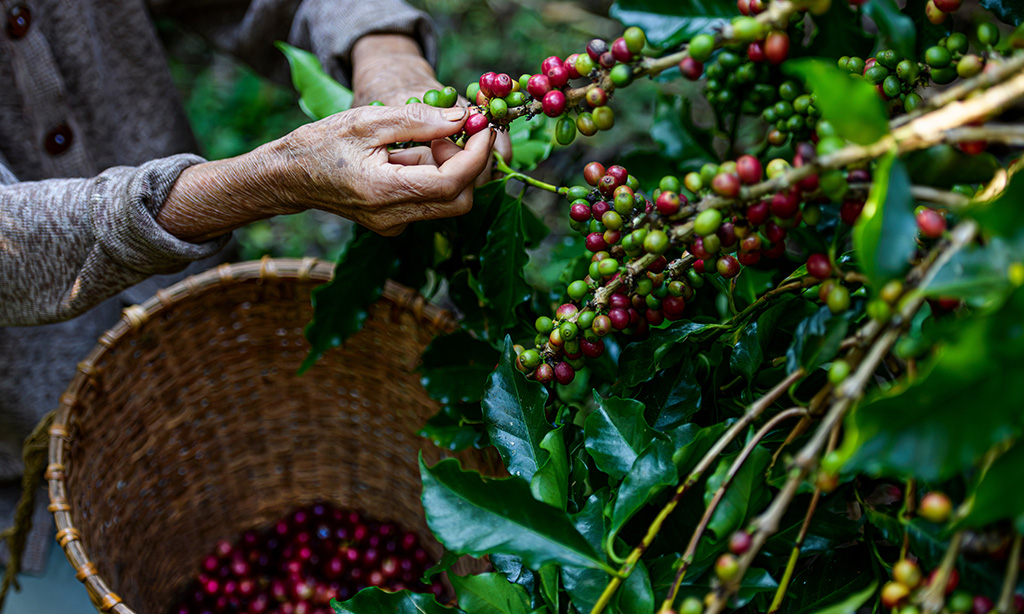
Let’s start from the beginning. Coffee is the seed of a fruit commonly called “cherry”. Inside each cherry there are usually two beans, which are extracted and processed after harvesting. The harvesting phase (picking) is crucial: selecting cherries at the right level of ripeness is one of the key steps in ensuring a high-quality result.
As a plant, coffee has specific botanical characteristics that directly influence the final result. The first important distinction is between single origin coffee and blends.
A single origin coffee comes from a clearly defined geographical area, such as a Country, a region or even a single farm. This kind of coffee makes it easier to recognize the unique characteristics of each origin and the differences compared to other areas.
On the other hand, a blend combines different coffees, often from multiple regions and sometimes different varieties (such as Arabica and Robusta). With different organoleptic features and properties, a well-balanced blend offers a consistent and recognizable flavor profile over time.
Variety is another important factor in defining a coffee’s aromatic profile and the result in cup. It always works together with terroir, processing and roasting, which can enhance or reduce its characteristics.
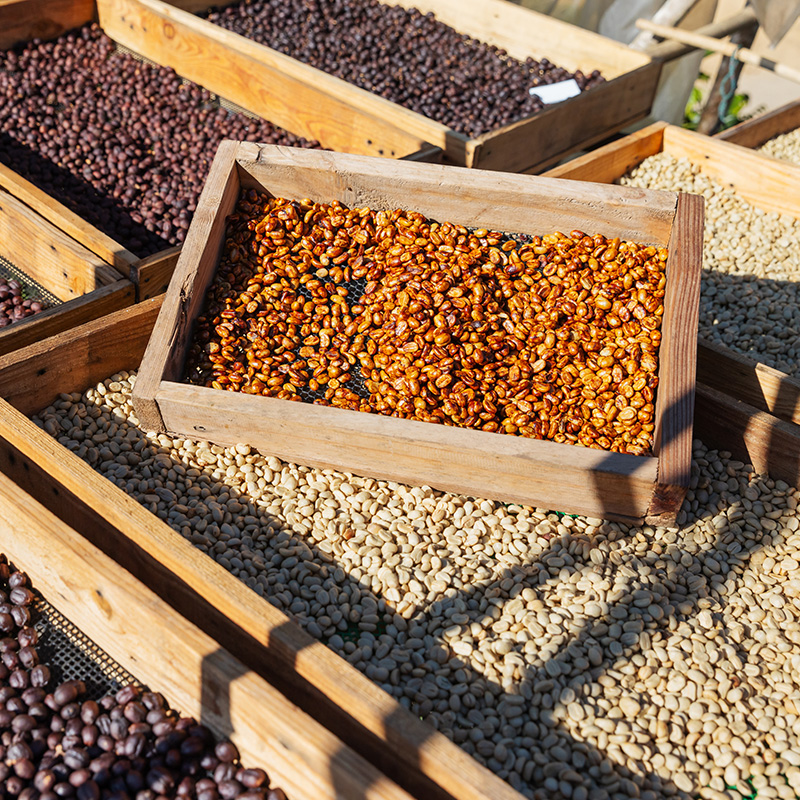
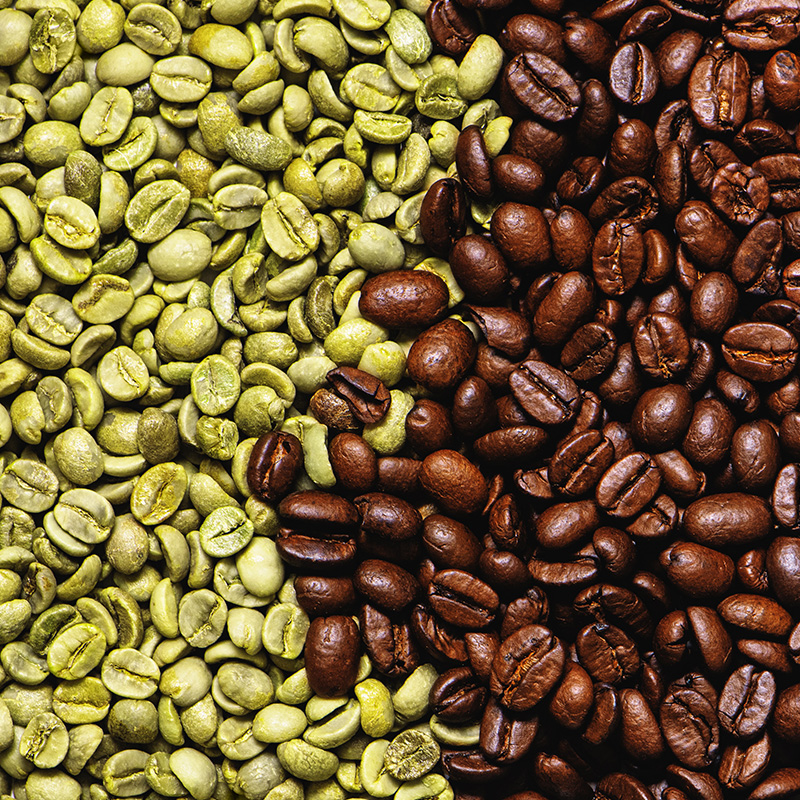
The most widespread and appreciated variety is Arabica (Coffea arabica), which represents most of the world’s production. It grows at higher altitudes, where cooler temperatures slow down the fruit ripening and allow more complex aromas to develop. Arabica coffees express brighter acidity, floral notes and a wide range of nuances, depending on origin and processing. Specialty coffee is Arabica and many traditional Italian espresso blends use it as their main component, mixed with Robusta.
Within the Arabica species there are many botanical varieties, each one with its own characteristics. Among the most traditional and widespread ones there is Typica, often considered the “mother” of many modern varieties, known for its elegant profile and delicate acidity; Bourbon, appreciated for its sweetness and complexity, mainly grown in Rwanda and Burundi, and Caturra, a natural mutation of Bourbon with a distinctive acidity. More recent and well-known varieties include Gesha, SL28 from Kenya and Pacamara from El Salvador.
In particular, Gesha, named after the Gesha forest in Ethiopia, has redefined the world of specialty coffee. Its profile is unmistakable: with notes of jasmine and hibiscus flowers, bergamot, earl grey tea and tropical fruit.
Robusta (Coffea canephora) is the second most common variety. It is more resistant and productive, typically grown at lower altitudes. Its profile is stronger, more bitter, and with a thicker crema. In espresso blends, especially in the Italian tradition, Robusta helps creating a fuller and creamier result, and it contains more caffeine than Arabica.
Less common but equally interesting is Liberica (Coffea liberica), recognizable for its large and asymmetrical beans with a distinctive “ear-shape”. It offers an unusual aromatic profile, often more intense and distinctive, and is mainly grown in regions such as the Philippines and parts of West Africa, remaining rare in West.
You can find more details in our article on the different types of coffee.
Terroir
The concept of terroir, borrowed from the world of wine, helps in explaining the differences between different types of coffees. It includes all the environmental factors that influence the plant: soil, altitude, climate, exposure and growing conditions. Two coffees of the same variety, processed in the same way but grown in different areas, might develop different features.
Altitude is also one of the most important factors. At higher elevations, the fruit ripens in a slower way, which not only enhances the development of complex aromas but also increases bean density.
Coffees classified as SHG (Strictly High Grown) or SHB (Strictly Hard Bean) come from these higher altitudes and are known for their well-structured profiles with bright acidity and layered aromas.
A highly qualified barista is able to understand the raw material and its characteristics and adapt the extraction to achieve the best possible result.
Specialty coffee
Specialty coffee refers to coffee that has a score of at least 80 points out of 100 according to the SCA (Specialty Coffee Association) evaluation protocol. The SCA is the international organization that sets global quality standards for coffee and promotes research on coffee science. Within this context, the Q Grader certification represents the highest level of professional qualification issued by the Coffee Quality Institute (CQI). Q Graders are certificated tasters who evaluate coffee using strict protocols, identifying both strengths and defects. Specialty coffee follows high-quality standards throughout the entire process (from traceability and sustainable farming practices to careful post-harvest processing) and it is also roasted with precision, based on the specific characteristics of each origin.
You can find out more about this topic in our article on speciality coffee.